한국어/English
HeoLabOptogenetics & Spatiotemporal RNA Control Lab

Principal Investigator: Prof. Won Do Heo

OPTOGENETICS & SPATIOTEMPORAL RNA CONTROL

With light and RNA,we engineer new switchesin living cells and animalsto explore biology and develop new therapies.

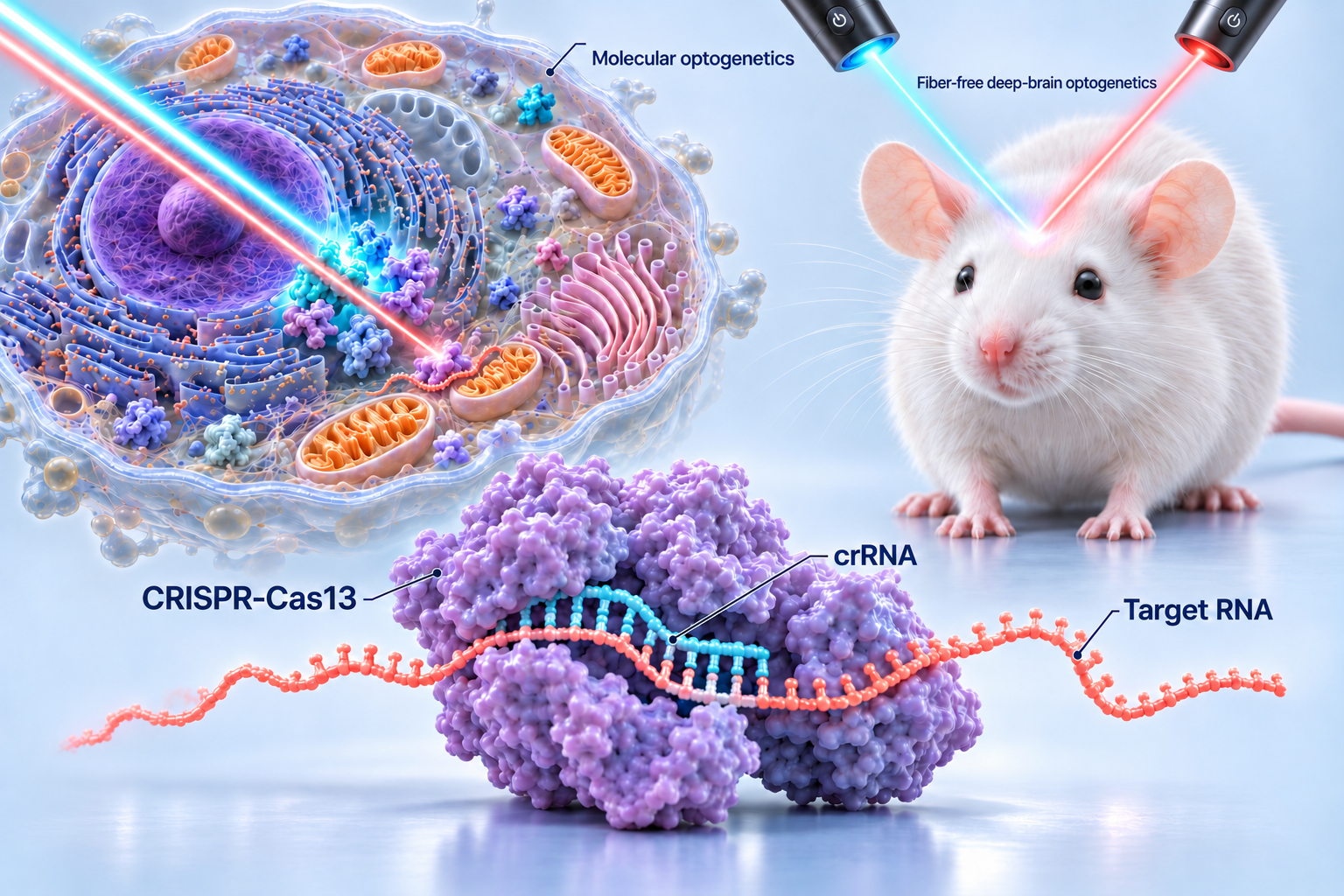
Conceptual illustration of light-controlled cells and a mouse, with Cas13 bound to target RNA
Cellular controlProteins · Signaling · Calcium ions (Ca²⁺)
In vivo controlBrain function · Behavior
RNA control & therapeuticsCRISPR-Cas13 · RNA engineering
From molecules to cells to living organismsCONCEPTUAL ILLUSTRATION

Visualizing. Controlling. Restoring.

SCROLL TO DISCOVER ↓
4,000 distributions (2008–present)

HeoLab-developed plasmids distributed worldwide

Molecules→organisms

From tool design to validation in living systems

Where & When

We design where and when molecules act

What if a flash of light
could change how life works?

Could precise control of RNA
open new paths to treating disease?

What if we could pause proteins, activate cellular signals,
and change where and when RNA works?
How much more could we understand about life?

HeoLab uses molecular optogenetics to control protein function and cellular signaling, and RNA-targeting CRISPR-Cas13 and RNA engineering to precisely regulate RNA function. Through these two research directions, we uncover the mechanisms of life and explore new possibilities for treating disease.

From observation to control. From molecular mechanisms to new therapeutic possibilities.

Three research directions.
From biological control to therapeutic possibilities.

We connect molecular optogenetics and RNA engineering
with fiber-free control and therapeutic research.

01 LIGHT

Building cellular switches
with light.

We develop molecular optogenetic and chemogenetic tools to control proteins and cellular signals at chosen times. We explore causal links between changes within cells and functions in living organisms.

LARIAT

Light-induced protein clustering enables reversible inhibition.

OptoRTKs

Controlling receptor tyrosine kinase signaling with light.

Optobody

Switching intracellular antibody activity with light to control target proteins.

OptoSTIM1

Controlling cellular calcium signals with light.

SynapShot

Visualizing structural changes in synapses in living cells and brains.
02 RNA

Designing RNA function
in space and time.

RNA-TARGETING CRISPR-Cas13

We combine RNA-targeting CRISPR-Cas13 with optogenetic and chemogenetic tools to design which RNA acts, where, and when. We precisely control RNA localization, translation, degradation, editing, and chemical modification while exploring new strategies for RNA therapeutics.

mRNA-LARIAT

Controlling mRNA localization and translation with light.

mRNA-RELISR

Storing and releasing mRNA to control its availability and translation in space and time.

paCas13

Adding light switches to RNA degradation and base editing.

RNA modification

Extending RNA control through Cas13-directed acetylation.

03 FIBER-FREE THERAPEUTICS

External light.
New therapeutic possibilities.

FIBER-FREE OPTOGENETICS

We control calcium, receptor, and genetic signals with external LEDs, without implanting optical fibers in the brain. We translate molecular tools into studies of Parkinson’s and depression-related mouse models and light-controlled insulin secretion.

monSTIM1 · AAV variants

Fiber-free control of brain calcium signaling, extended to variants compatible with AAV delivery.

OptoRET

External LEDs activate RET signaling to investigate improved motor function in Parkinson’s mouse models.

OptoFGFR1 · OptoTrkB

Light-controlled growth-factor receptor signaling reveals roles in neurogenesis, depression-related pathways, and brain function.

PA-Flp

External illumination triggers genetic recombination in deep mouse brain regions without implanted optical fibers.

monSTIM1 · Islet organoids

Light regulates insulin secretion from human stem-cell-derived pancreatic islet-like organoids.

Mouse and organoid studies require expression of the molecular tools. Fiber-free illumination conditions are specified in the corresponding papers.

Explore representative results and evidence ↗
OUR NEXT QUESTION

The right RNA, in the right cells,
at the right moment.

Turning precise RNA control into a foundation for new therapeutic strategies.

Where and when RNA works matters.

The same mRNA can influence cellular function differently depending on its location, translation timing, and chemical modifications. Using CRISPR-Cas13 and light-responsive tools, we develop platforms to control these processes in space and time.

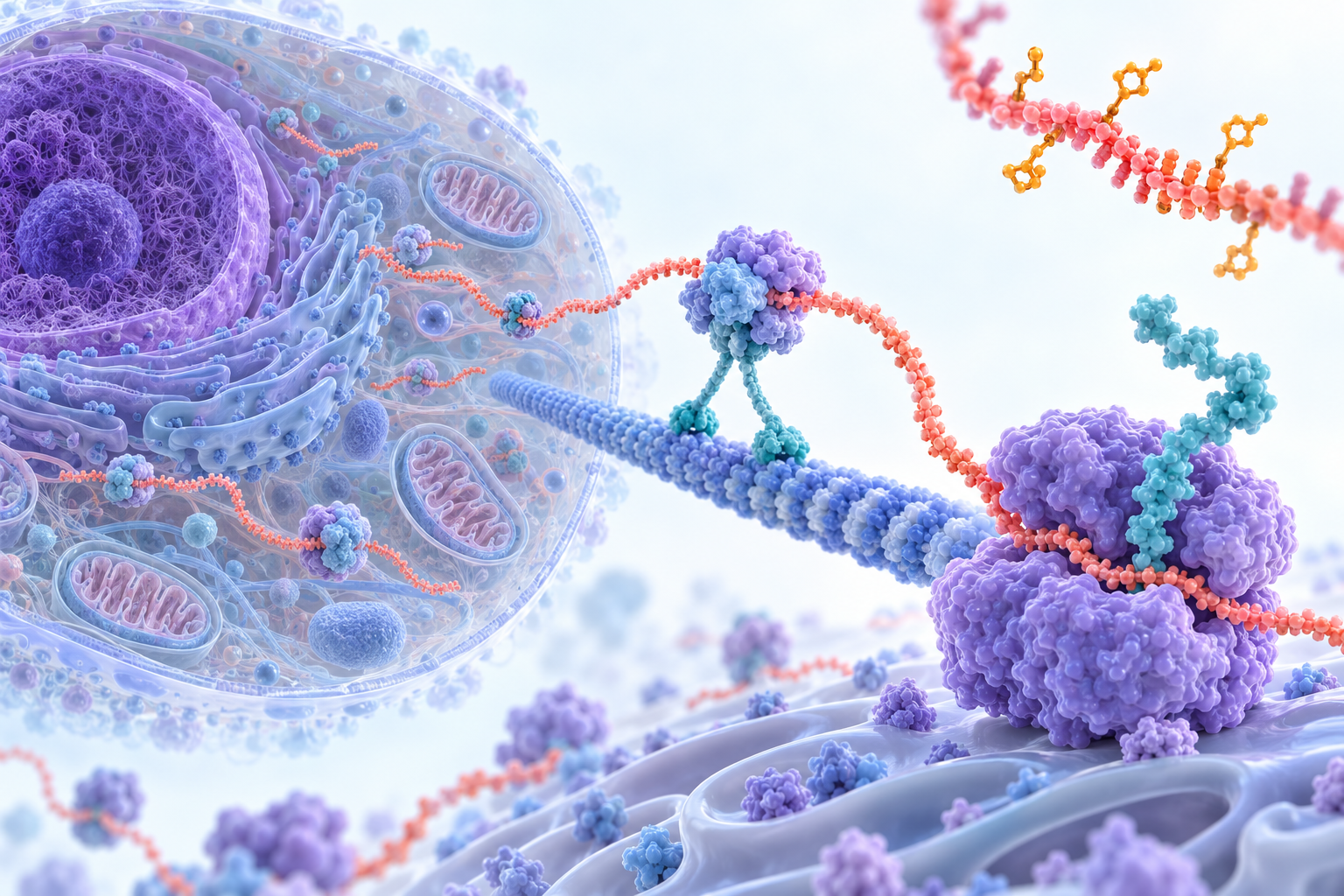
Conceptual illustration of cellular RNA localization, transport, translation, and chemical modification
CONCEPTUAL ILLUSTRATION · RNA in space and time

Genetic information flow

DNA→RNA→Protein

Transcription and translation

The dimensions of RNA regulation

Localization

Where RNA resides

Transport

Where RNA travels

Local translation

When and where proteins are made

Chemical modification

How RNA function is tuned

Control where RNA works, when it is translated, and how it functions.

Switches for living systems

From receptors and proteins to calcium ions and RNA: explore our published molecular tools.

Receptors & signaling

OptoRTKs · OptoTrks · OptoFGFR1 · OptoRET

Protein function

LARIAT · IM-LARIAT · Optobody · Opto-vTrap

Calcium ions (Ca²⁺)

OptoSTIM1 · monSTIM1

RNA control · CRISPR-Cas13

mRNA-LARIAT · mRNA-RELISR · paCas13 · dCas13–eNAT10

Explore tools and papers ↗

Questions become tools.
Tools enable discovery.

View all publications ↗

Original figures are shown where retrieved; click an image to enlarge it. For other papers, use “Figures in article”.

Our tools.
Your discoveries.

Tools built in our lab inspire new questions in the hands of other researchers. HeoLab has made 4,000 free distributions of lab constructs to researchers in Korea and around the world.

Find tools on Addgene ↗

Our molecular toolkit

Explore 27 published tools, platforms, and imaging methods spanning molecular optogenetics, chemogenetics, RNA engineering, and biosensing.

Fiber-free optogenetics

Control molecular signaling with external light, without implanting optical fibers in the brain.

Based on tools, variants, and illumination conditions tested in mouse studies. Fiber-free illumination requires genetic expression in target cells; see each paper for experimental conditions.

Fiber-free light delivery. Causal insights into living systems.

External illumination controls calcium, receptor, and genetic signals to test their roles in memory and disease models.

From calcium signals to memory and behavior

External LED illumination induced calcium-dependent responses in neurons and astrocytes, enhanced contextual memory, and modulated observational fear.

Nature Communications · 2020 ↗

Improved motor function in a Parkinson’s mouse model

Transcranial blue LED illumination in the home cage improved limb coordination and locomotion and reduced chest tremor in male AAV-hA53T mice, evaluated with AI-based behavioral analysis.

Nature Communications · 2025 ↗

Linking neurogenesis to depression-related signaling

Optical activation of the dentate-gyrus FGFR1–Notch–BDNF pathway induced neurogenesis and improved depression-related behavior in young mouse models.

Experimental & Molecular Medicine · 2025 ↗

TrkB activation without an implanted brain fiber

Blue LEDs in a home-cage lid induced pERK1/2 responses in the dentate gyrus, directly demonstrating TrkB signaling control without implanted optical fibers.

Journal of Molecular Biology · 2020 ↗

Light-triggered genetic switches in deep brain regions

External LED illumination activated Flp recombination in deep brain regions. A coupled Flp–Cre system silenced Cav3.1 in the medial septum and increased object-exploration behavior.

Nature Communications · 2019 ↗

Beyond the brain: light-controlled insulin secretion

Human stem-cell-derived pancreatic islet-like organoids secreted insulin in response to light. After transplantation into mice, external LED stimulation elicited detectable human C-peptide in blood.

Molecular Therapy · 2023 ↗
Evidence comes from mouse and organoid studies using fiber-free illumination. Target cells require expression of the tool; these preclinical findings do not establish efficacy in humans.
Key HeoLab tools · Targets · Functions · Publications
ToolTargetWhat can it do?Publication
LARIATProteinsReversibly inhibits target proteins by trapping them in light-induced clustersNature Methods · 2014 ↗
OptoSTIM1Intracellular calcium signalingActivates endogenous calcium channels with lightNature Biotechnology · 2015 ↗
mRNA-LARIATmRNA localization and translationTraps mRNA with light to control its localization and translationNature Cell Biology · 2020 ↗
Opto-vTrapVesicular release and synaptic transmissionReversibly inhibits vesicular release and neurotransmission with lightNeuron · 2021 ↗
SynapShotSynaptic structureVisualizes synaptic structural dynamics in living cells and in vivo in real timeNature Methods · 2024 ↗
paCas13Target RNA and RNA base editingA CRISPR-Cas13 platform for controlling RNA function with light-dependent timingNature Communications · 2024 ↗
dCas13–eNAT10Targeted RNA acetylationPrograms ac4C modification of target RNA to modulate its functionNature Chemical Biology · 2025 ↗
RELISRProteins and mRNAStores and releases proteins and mRNA with light in living cells and animalsNature Communications · 2025 ↗
CRY2clustProtein clusteringEnhances light-induced protein oligomerization with a short peptide extensionNature Communications · 2017 ↗
OptoTrkANeurotrophin receptorsActivates TrkA signaling with light to investigate neuronal signalingNature Communications · 2014 ↗
OptoCCR5 (Opto-CCR5)CCR5 / GPCR signalingActivates intracellular CCR5 signaling with light to investigate the temporal window for memory linking. Designed and constructed by HeoLab based on Opto-XR.Nature · 2022 ↗
Optogenetic TGF-β signalingTGF-β and Smad signalingControls the timing and location of TGF-β signaling with lightACS Synthetic Biology · 2017 ↗
OptoFASFas signalingUses light-controlled Fas signaling to study neural stem cell proliferation and memoryScience Advances · 2020 ↗
Chemically inducible FasFas signalingInduces Fas activation in vitro and in vivo using FKBP–FRB–rapamycinBBRC · 2020 ↗
IM-LARIATMembrane trafficking and RabUses light-induced Rab oligomerization to regulate intracellular membrane traffickingNature Chemical Biology · 2016 ↗
PA-FlpGenetic recombinationNoninvasively activates Flp recombinase in deep mouse brain regionsNature Communications · 2019 ↗
Optogenetic intracellular antibodiesEndogenous proteins and antibodiesActivates intracellular antibodies and nanobodies with light to directly modulate target proteinsNature Methods · 2019 ↗
AAV-compatible calcium actuatorsEndogenous calcium channelsActivates endogenous calcium channels in vivo with AAV-compatible optogenetic toolsMolecular Brain · 2023 ↗
Cas13b pseudoknot targetingTarget RNA cleavageTargets viral RNA pseudoknots to suppress replicationMolecular Therapy · 2023 ↗
Extracellular optogenetic antibodiesAntigen recognition and cell behaviorGates antigen recognition and modulates cell behavior with extracellular optogenetic antibodiesCell Chemical Biology · 2026 ↗
Small GTPase biosensorsSmall GTPase activityUses intensiometric biosensors to visualize the activity of multiple small GTPases in vivoNature Communications · 2019 ↗
Ca²⁺ sparklet toolkitCalcium signaling and migrationDissects the role of local calcium signals in coordinated cell migration using optogenetic toolsPNAS · 2016 ↗
INSPECTProtein–protein interactionsVisualizes and quantifies protein–protein interactions in living cells through synthetic condensate formation, enabling analysis of Rho GTPase–effector networks.Nature Communications · 2025 ↗

The table includes original platforms, variants, and collaborative methods. Descriptive labels are used where a short tool name is not specified. It is not a complete plasmid inventory; see each paper and Addgene for constructs and availability.

Find tools on Addgene ↗

Give the molecules you study
a switch of your own.

Engineer proteins, image living cells,
and experience the moment your own tool starts working.

Across biology, chemistry, and engineering,
we welcome students ready to explore new questions together.

Research inquiries ↗wondo@kaist.ac.kr